What It Takes to Build a Multiplayer Ludo Game
Ludo has four colours, sixteen tokens and one dice. On paper it is one of the simplest games there is, which is why so many people are surprised by what a multiplayer version involves. Drawing the board is perhaps a tenth of the work.
The dice has to be rolled by the server
In a single-player game the phone can roll the dice. In a multiplayer game it must not. If a player’s phone decides the roll, a modified app can decide it too. The server rolls, records the result and tells every player the same thing. The same goes for every move: the phone asks, the server decides.
The server holds the whole match
Whose turn it is, where every token stands, how long is left on the turn timer — all of it lives on the server, and every phone is a window onto it. That is what makes the next three problems solvable.
Dropped connections
Phones lose signal constantly: a lift, a tunnel, a call coming in. A player who drops out must be able to come back to the same match, see the board exactly as it is, and carry on. Without that, most matches never finish.
Players who leave
When someone quits, the other three should not be punished. The usual answers are a turn timer that skips them and a bot that takes over their seat.
Empty seats
A new game has few players online at 3 a.m. Bots that fill a table mean nobody waits long for a match. They need to play at a believable pace and level.
Finding a match
- Quick play: put four people at a table within seconds.
- Private rooms: a code you send to friends and family.
- Two-player and four-player tables, and different rule sets.
Reasons to come back tomorrow
A match lasts a few minutes. What keeps a game installed is everything around the match: tournaments with a start time, leaderboards, daily rewards, new boards and tokens to collect. These are features to plan from the beginning, not to bolt on later.
It has to run on the phones people own
Many players are on older, low-memory Android phones and patchy mobile data. The game should load quickly, stay small to download and keep working on a weak connection. This is decided by how the art and the network code are built, not fixed at the end.
The panel nobody sees
Someone has to run the game: see who is online, schedule tournaments, change rewards, deal with a reported player, read the numbers. That is an admin panel, and it is part of the product.
A word on games played for money
Rules on games played for money have tightened sharply in India. Before planning any feature that involves real money, take legal advice. Free-to-play games with in-app purchases and advertising are a different matter and remain the common model.
What we use
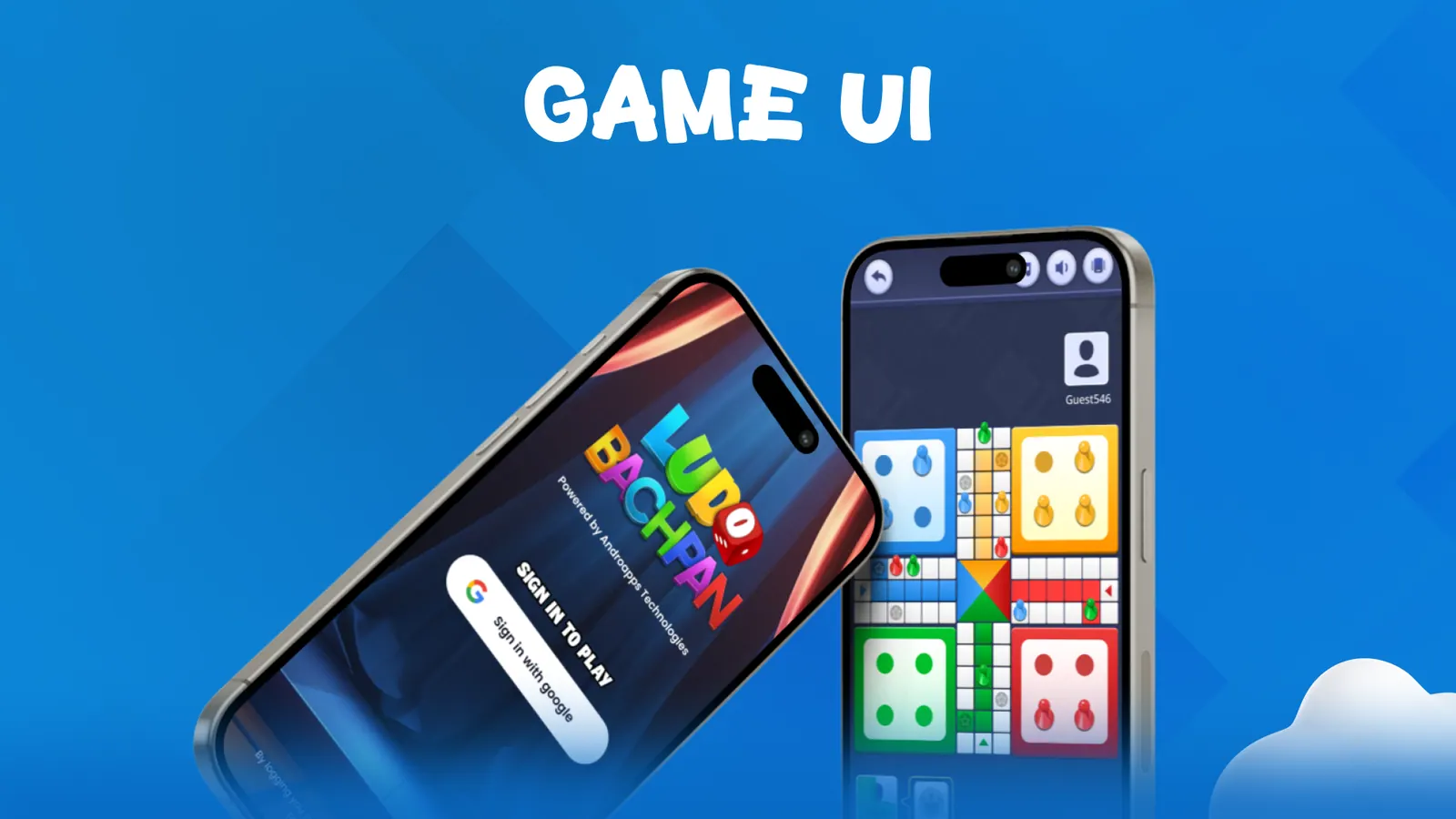
We build the game in Unity with C#, which produces both the Android and the iOS version, and the game server in Node.js with a live connection to each phone. Ludo Bachpan, a multiplayer Ludo game we built, is live on both stores. If you are planning a board, card or quiz game, see game development or talk to us.